The Shaami Regulatory Spotlight - 29
September 1, 2026
Showcasing the latest developments, news and updates from African national medicines regulatory authorities.
Mozambique became an ML3 market on 24 August, and that should move it up your filing sequence rather than confirm what you already assumed about it.
WHO has recognised the Autoridade Nacional Reguladora de Medicamentos de Moçambique (ANARME, IP) as having reached Maturity Level 3 for the regulation of medicines and imported vaccines. Mozambique becomes the tenth African country at that level, joining Egypt, Ethiopia, Ghana, Nigeria, Rwanda, Senegal, South Africa, Tanzania and Zimbabwe, and the first Portuguese-speaking one.
That last point carries the regional consequence. Until now every ML3 authority on the continent sat in an Anglophone, Francophone or Arabophone system, which left the Lusophone markets without a peer working in their own language and legal tradition. ANARME now supplies that reference point for Angola, Cabo Verde, Guinea-Bissau and São Tomé and Príncipe, at exactly the moment the African Medicines Agency is building out its reliance networks.
There is a second signal in how the decision was reached. Mozambique is among the first countries recognised following review by WHO's new Technical Advisory Group on Regulatory Systems Strengthening, and the same process recommended that South Africa retain its ML3 status for the regulation of vaccines manufactured, imported or distributed in the country.
Two assumptions are worth retesting this month. The first is where Lusophone markets sit in your filing sequence. Mozambique and Angola commonly go late, for two reasons: submissions into Portuguese speaking markets are the heavier lift, and there was no ML3 authority in that group to anchor a reliance case around. The first reason still holds. The second no longer does. The other assumption is what ML3 is for. It is easy to read it as a fact about an authority, something for the country profile slide, when it is an input into decisions you are already making: which authority you file with first, whose approvals you can cite downstream, and what evidence a second regulator will accept without repeating the review. Below, three developments worth acting on now, and everything else worth knowing about.
Bakani Ncube
WHO confirmed on 24 August that ANARME has reached Maturity Level 3 for the regulation of medicines and imported vaccines under its global classification of national regulatory authorities. Mozambique is the tenth African country to reach ML3 and the first Portuguese-speaking one, joining Egypt, Ethiopia, Ghana, Nigeria, Rwanda, Senegal, South Africa, Tanzania and Zimbabwe.
The assessment ran through the WHO Global Benchmarking Tool, covering registration and marketing authorisation, licensing, market surveillance and control, pharmacovigilance, regulatory inspection, laboratory testing and clinical trials oversight, as applicable. ML3 denotes a stable, well-functioning and integrated system, one level below the ML4 designation reserved for regulatory systems showing advanced performance and continuous improvement.
The practical consequence sits in reliance. ML3 is the threshold most reliance and recognition frameworks apply when deciding whose decisions they will take into account, so a Mozambican approval is now capable of carrying weight elsewhere, and ANARME is better placed to make use of decisions from other authorities in return.
Two things to check this quarter. First, whether Mozambique still sits in the late tranche of your regional filing sequence on capacity grounds that no longer hold. Second, whether the reliance criteria of the authorities you file with recognise Mozambique yet, because recognition is applied authority by authority and rarely updates on the day WHO publishes.
More details can be accessed here.
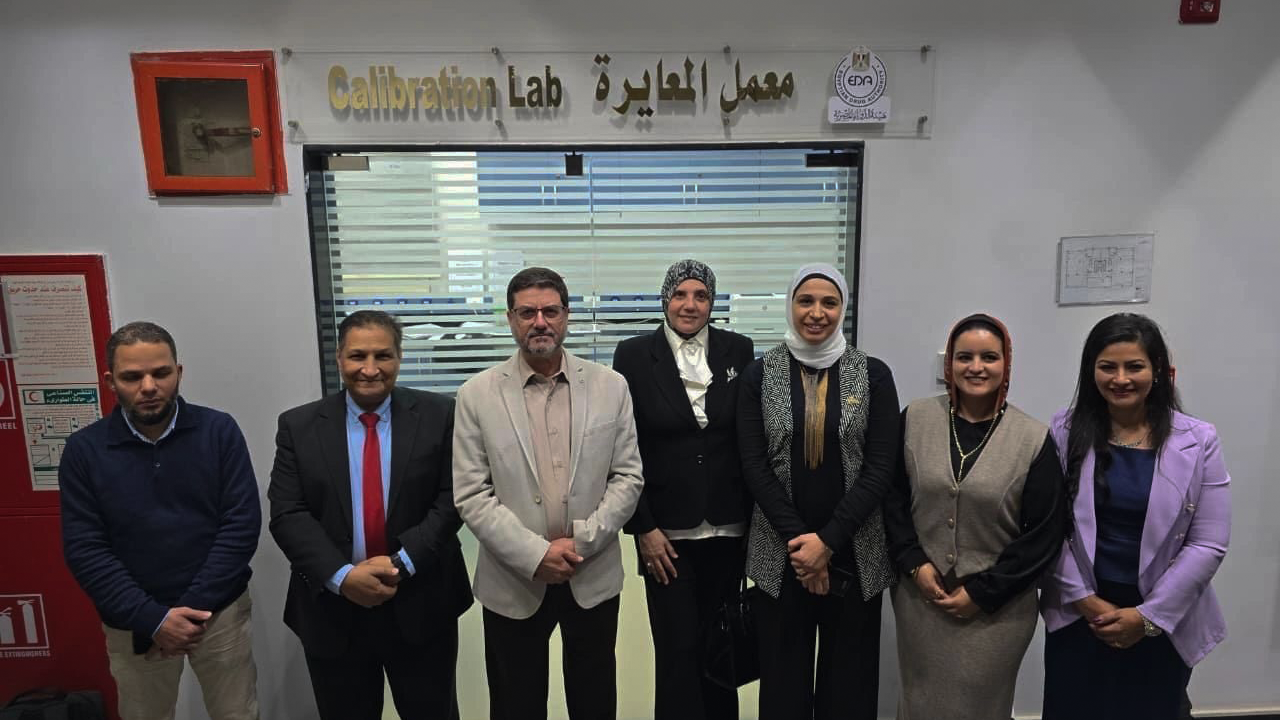
The Egyptian Drug Authority's Calibration Laboratory, which sits within the Maintenance and Calibration Department under the Central Administration for Drug Control, has been accredited by the Egyptian Accreditation Council (EGAC) to ISO/IEC 17025 for the calibration of High-Performance Liquid Chromatography (HPLC) systems fitted with ultraviolet detectors. EGAC granted the accreditation following assessment, making this the first accredited laboratory of its kind in Egypt and on the continent.
This accreditation reflects the EDA’s commitment to implementing the highest standards of quality and technical competence, as well as its continuous efforts to strengthen its regulatory infrastructure and enhance the capabilities of its laboratories in line with international best practices and standards. These efforts support the efficiency of the pharmaceutical regulatory system and keep pace with the latest global developments.
This accreditation represents a strategic step toward enhancing the accuracy and reliability of laboratory testing results by ensuring that calibration activities are performed in full compliance with the requirements of ISO/IEC 17025. It contributes to improving the efficiency of the pharmaceutical regulatory system while strengthening the quality, safety, and efficacy of pharmaceutical products available on the Egyptian market. It also reflects the professionalism and extensive technical expertise of the Calibration Laboratory team, which has accumulated more than 15 years of experience in accredited calibration services.
The Tanzania Medicines and Medical Devices (Control of Blood and Blood Products) Regulations 2026 were published under Government Notice No. 149 and took effect on 19 June 2026. They are made under the Tanzania Medicines and Medical Devices Act, Cap. 219, and apply across Tanzania Mainland.
The regulations require licensing, safety compliance and regulatory inspection of all blood establishments, processing facilities, collection centres and storage units. They impose controls on the import and export of blood, biological materials and plasma-derived medicinal products, and they establish a haemovigilance system for monitoring and reporting adverse events and reactions.
TMDA has asked all existing blood collection centres, processing entities, hospitals, importers and related establishments to align their operational processes with the regulations.
If you supply plasma-derived medicinal products into Tanzania Mainland, three questions are worth answering this month: whether your importer holds the licence the regulations now require, whether your import documentation satisfies the new controls, and who in your organisation owns haemovigilance reporting into TMDA. The first of those is the one that stops consignments at the port.
More details can be found here.
Under the same process that recognised Mozambique, WHO recommended that SAHPRA retain its ML3 status for the regulation of vaccines manufactured, imported or distributed in South Africa, following an additional assessment. The recommendation extends recognition first granted in 2022. The Technical Advisory Group on Regulatory Systems Strengthening is the new element here, convening independent international experts to advise WHO on whether ML3, ML4 and WHO-Listed Authority recommendations are supported by the findings of its evaluation processes.
Malawi's Pharmacy and Medicines Regulatory Authority participated in a five-day benchmarking visit to the National Drug Authority in Kampala, shadowing NDA's implementation of its integrated Regulatory Information Management System (RIMS). PMRA Director General Charles Chimenya used the opening of the visit to commend the collaboration, which supports a digital transformation programme covering the automation of core regulatory functions and processes. PMRA is implementing its own RIMS with World Bank financing. Manufacturers filing in Malawi should expect submissions and correspondence to migrate to a portal over the implementation period.


The Ministry of Health, working with ZAMRA, ZAMMSA and partners, convened the National Pharmaceutical Track-and-Trace Technical Working Group on 6 August 2026 to review progress and accelerate the national rollout. The system is already operational in selected health facilities, starting with vaccines, and will expand progressively to essential medicines and other medical products. The stated aims are supply chain visibility, faster recalls and detection of substandard and falsified medicines. Suppliers of vaccines into Zambia should establish now what serialisation and data submission the system expects of them.
.png)
The African Medicines Agency, with Africa CDC, brought national regulatory authorities, regional regulatory mechanisms, member states and partners together in Harare for a joint workshop on product prioritisation and fast-track regulatory mechanisms for African manufacturers. The workshop focused on identifying priority health products aligned with the African Pooled Procurement Mechanism (APPM) and on designing accelerated regulatory pathways that support African manufacturers while maintaining the highest quality, safety and efficacy standards. Both institutions frame the work as connecting prioritisation, regulatory review, procurement and market access, in service of the African Union ambition of manufacturing at least 60% of Africa's health products on the continent by 2040. Manufacturers with products on the APPM priority list should track how eligibility for the accelerated pathway is being defined.

The African Medicines Agency received Aser Minoungou, Executive Director of the Association Africaine des Centrales d'achats de Médicaments Essentiels (ACAME), at its Kigali headquarters to discuss how the two institutions can work together on the regulation of medical products in Africa. ACAME operates across 22 countries and supports its members in procuring pharmaceutical products. The discussion covered AMA's work on a continental quality assurance mechanism for the procurement of priority medical products, including maternal and child health products, extending into safety and quality monitoring to detect substandard and falsified products. The two agreed to explore areas for partnership.
The African Medicines Agency will convene its first AMA Week in Kigali, with an Industry Day on 25 October 2026 followed by AMA Week from 26 to 30 October. The programme includes the launch of AMA's Regulatory Innovation and Manufacturing Readiness Hub, meetings of AMA's technical committees, and the 10th African Medicines Regulators Conference, co-convened with WHO. Attendance is by invitation only. Expressions of interest to attend Industry Day are open to industry association representatives and members of academia involved in research and development and are worth submitting early rather than close to the date.
Each edition, this section answers one question from a reader, handled by the specialist whose remit it falls under. If you have a question about a regulatory development, about how an authority is applying a requirement in practice rather than on paper, or about what a change means for your portfolio in a specific market, send it to us. Questions go to the specialist closest to the subject.
regulatory@marketaccess.africa
We launched the Shaami Regulatory Assessment Tool on 7 August. It draws on years of regulatory surveillance, field intelligence, tracking of developments across the continent, and direct relationships with regulatory authorities, all gathered through Shaami by Market Access Africa, our regulatory practice supporting clients end-to-end across the African regulatory landscape, from pathway analysis through to marketing authorisation.
Central to Shaami is the Regulatory Assessment Tool, an intelligence platform that identifies the most suitable marketing authorisation pathways across more than 20 markets, with more being added.
If you are registering a product in an African market, try the platform here: Regulatory Assessment Tool