The Shaami Regulatory Spotlight - 28
August 3, 2026
Showcasing the latest developments, news and updates from African national medicines regulatory authorities.
Botswana's device market changed on 30 June. Class C and D devices not registered by that date came off the Listing Register, and a lapsed listing is not a fallback position; it is an absence of authorisation. If you supply high-risk devices or IVDs into Botswana and have not confirmed your status in BRIMS this month, that is the first thing to do after reading this.
The wider signal is the timetable itself. BoMRA has published dates for Class B on 31 March 2027 and Class A on 30 September 2027, joined IMDRF in September 2024 and GHWP in December 2024, and put draft device regulations out for comment. This is the WHO Global Model Regulatory Framework expanded level being implemented against a schedule, a strategy in motion.
Ethiopia ran its first device self-benchmarking exercise in July, following EFDA's securing of Maturity Level 3 for medicines last September. Device regulation is following the medicines pathway a few years behind and moving faster, supported by existing machinery.
If your device strategy for the continent still treats registration requirements as something to monitor rather than something to schedule against, this is the month to change that. Below are three developments worth acting on now, and everything else worth tracking.
Shireen Haroon.
Botswana now has three registration deadlines on the calendar and one of them has already passed. Class C and D devices required registration by 30 June 2026. Class B follows on 31 March 2027 and Class A on 30 September 2027. Once a deadline passes, the device is removed from the Listing Register and must appear on the Registration Register instead, so the question for anyone supplying into Botswana is not whether you are listed, but which register you are on.
BoMRA is working to a medical device and IVD strategy running from 2022 to 2030 that takes the country from the WHO Global Model Regulatory Framework basic level of control to the expanded level. The legal basis has moved from MRSA 2013 to MRSA 2025, which introduces mandatory registration, licensing, inspections, retentions, active surveillance and technical verification. BoMRA became an IMDRF affiliate member in September 2024 and a full GHWP member in December 2024.
Three details catch manufacturers out. Registration runs through BRIMS, and applicants that are not local entities must appoint a local technical representative before filing. Annual retention fees apply to both listed and registered devices, and non-payment by the anniversary date results in removal. Mandatory permits and import fees apply to every consignment of medical devices and IVDs entering or leaving Botswana.
The draft BOMRA Medical Device Regulations 2026 are open for stakeholder feedback. If you hold a device portfolio in Botswana, comment on it now rather than adjust to it later.
More details can beaccessed here.
The Tunisian National Agency for Medicines and Health Products (ANMPS) has published guidance for importing companies to support the implementation of its new technical import control procedure and streamline the processing of import authorisation (APE) applications. Applications must follow the APE checklist published on the ANMPS website and be submitted as a single bound dossier in two parts: the documents required for the APE under the checklist, and those required for the administrative marketing authorisation confirmation (AMC), including signed undertakings, AMCs issued from an analysis bulletin and dated less than two years earlier, and corresponding invoices where references do not appear on the AMCs. Product labelling mock-ups should be attached where the AMCs or invoices do not clearly establish product similarity.
Importers are also asked to print the form pre-completed on the dedicated ANMPS application, indicating reference eligible for an administrative AMC, and to verify supplier references carefully to avoid designation errors that delay processing. Liaison sheets issued for an import in progress can no longer be amended once issued. For cosmetics, food supplements, and products without specific references, suppliers must complete the "References" field on the ANMPS platform with the container size (for example, bottle / 10 ml), the presentation (for example, box / 30tablets), and, for sports supplements, the relevant flavour.
The Medicines Control Authority of Zimbabwe (MCAZ) runs a Post-Marketing Surveillance (PMS) plan aimed at monitoring the quality of medicines distributed in Zimbabwe.
The sampling of medicines earmarked for laboratory analysis occurs at the different levels of the supply chain. The selection of products for inclusion in the plan is risk-based. Antidiabetics, HIV, malaria, and tuberculosis medicines will be included in the PMS plan for 2026 as these are essential medicines that are used by many patients in Zimbabwe and therefore assessing their quality is of particular importance.
As the Authority implements this plan, products designated for mandatory sampling and analysis will be communicated to relevant stakeholders to minimise potential disruptions. The list of these products is provided in Table I (Appendix)of Circular 16 of 2026.
Botswana's regulator has asked all marketing authorisation holders, local technical representatives, manufacturers and distributors of medical products to submit details of their designated Qualified Person Responsible for Pharmacovigilance. The completed BoMRA QPPV notification form and supporting documents go to safety updates@bomra.co.bw. Entities that have notified previously are asked to confirm any change in personnel or contact details, so an earlier submission is not a reason to skip this round. All submissions should be made no later than 30 September 2026. Instructions for submission as well as contact details for further information or clarification can be found here.

The National Agency for Food and Drug Administration and Control (NAFDAC) ran a seven-day benchmarking visit for a delegation from Côte d'Ivoire's National Regulatory Authority, AIRP (Autorité Ivoirienne de Régulation Pharmaceutique), to support the country's preparedness for the WHO Global Benchmarking Tool assessment towards Maturity Level 3. The programme covered clinical trials oversight, market surveillance and quality management systems, alongside site visits and discussion of regulatory practice. The visit continues NAFDAC's role in capacity strengthening and knowledge sharing among regulators in the ECOWAS region.

The Ethiopian Food and Drug Authority ran its first online self-benchmarking exercise for the medical devices regulatory system from 27 to 31 July 2026, with support from a WHO expert, measured against Maturity Level 3 benchmarks. The exercise was designed to assess current infrastructure and capacity, identify operational strengths and gaps for a targeted improvement plan, and support assurance on the safety, quality and effectiveness of devices reaching the public. Director-General Heran Gerba noted that securing Maturity Level 3 in the pharmaceutical sector some months earlier had supplied both the lessons and the organisational capacity for this exercise.
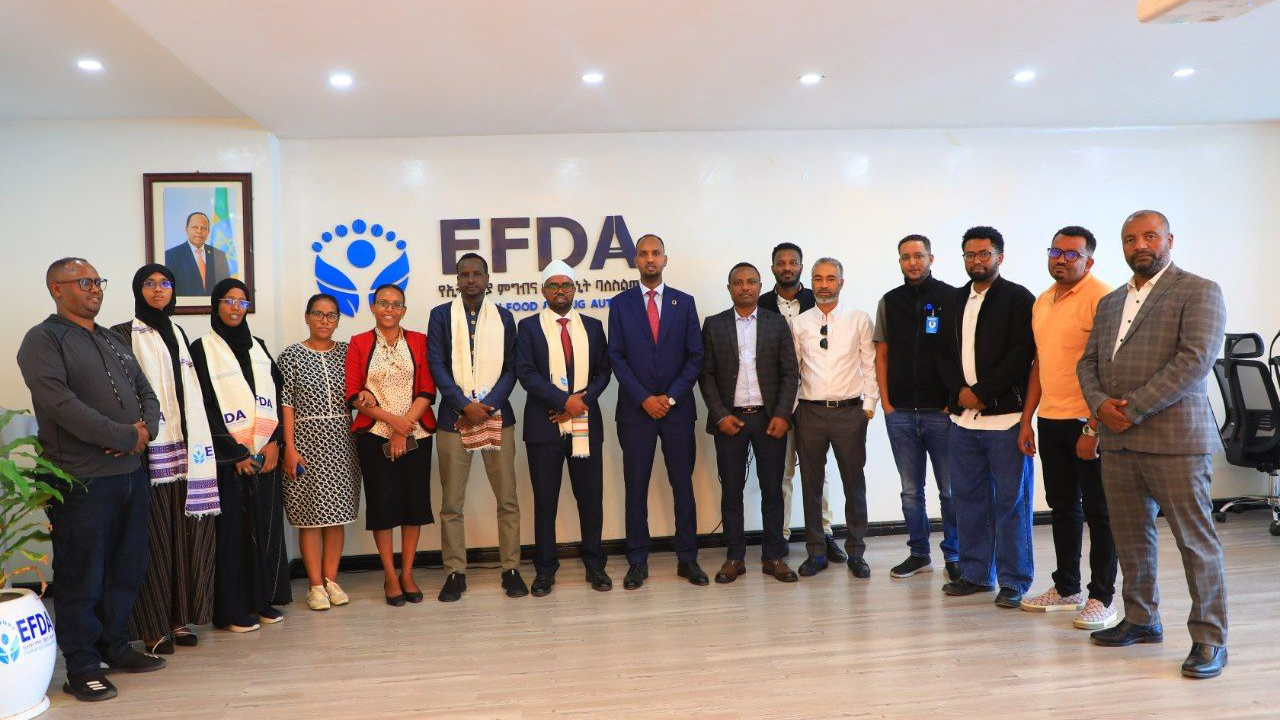
A delegation from Somalia's National Medicines and Health Products Regulatory Authority visited the Ethiopian Food and Drug Authority (EFDA) to strengthen its capacity in medicine evaluation and marketing authorisation. As a WHO Maturity Level 3 national regulatory authority for medicines, EFDA is well positioned to support Somalia through technical collaboration, knowledge exchange and capacity building. Given the shared border between Ethiopia and Somalia, close cooperation between the two regulatory authorities is essential to strengthen regulatory oversight and combat the illegal trafficking of medical products. The training gave the delegation hands-on experience in evaluating marketing authorisation applications, with emphasis on scientific review, benefit-risk assessment, and regulatory decision-making aligned with international standards.

The African Medicines Agency received a courtesy visit from H.E. Amb. Prof. Charity Manyeruke, Ambassador of the Republic of Zimbabwe to Rwanda and Dean of the African Diplomatic Corps in Rwanda, at the AMA Headquarters in Kigali.
The Ambassador met with AMA Director-General, H.E. Dr Delese Mimi Darko, and received updates on the operationalisation of AMA, ratification of the AMA Treaty and ongoing collaboration between AMA and the Medicines Control Authority of Zimbabwe (MCAZ). The DG expressed appreciation for MCAZ's continued support to AMA.
Each edition, this section answers one question from a reader.
If you have a question about a regulatory development, how an authority is applying a requirement in practice, or about what a change means for your portfolio in a specific market, send it to us and we will respond.
regulatory@marketaccess.africa

We have the Shaami Regulatory Intelligence tool - an assessment platform built to enable quick identification of the most suitable marketing authorisation pathways for over 20 markets and counting.
If you are looking to register your product in an African market, we invite you try out the platform by clicking the link below: