MAA Regulatory Spotlight - 26
June 11, 2026
Showcasing the latest developments, news and updates from African national medicines regulatory authorities.
This edition of the Market Access Africa Regulatory Spotlight captures a continent in the midst of consolidation. The developments gathered here, spanning national authorities in Nigeria, Zambia, South Africa, and Ethiopia alongside the African Medicines Agency itself, share a common direction of travel: away from fragmented, isolated national practice and towards harmonised, coordinated, and increasingly digital regulation.
The clearest signal comes from the continental level. Nigeria's deposit of its instrument of ratification of the AMA Treaty, the AMA's new Framework Agreement for Collaboration with the World Health Organization, and the second meeting of the Network of African Reliance Laboratories together mark a period in which the Agency is increasing operations. Each, in its own way, reflects the practical machinery of reliance and convergence being assembled – a treaty membership broadening to include the continent's largest market, a partnership lending technical weight to a young institution, and a laboratory network giving reliance a concrete form in the testing of health products.
At national level, the through line is transparency and reach. SAHPRA's Online Medicine Directory and NAFDAC's upgraded Med Safety App both place authoritative information and reporting tools directly in the hands of patients and professionals, strengthening post-marketing surveillance and supply chain integrity from the demand side. ZAMRA's work on a framework for substances that fall outside existing legal definitions, and EFDA's launch of an electronic clinical trial system, illustrate a complementary impulse: extending and modernising oversight to keep pace with an evolving market and to position African jurisdictions as credible, predictable environments for research and registration.
Read together, these updates point to a regulatory ecosystem treating harmonisation, digitalisation, and local manufacturing not as separate ambitions but as parts of a single agenda.
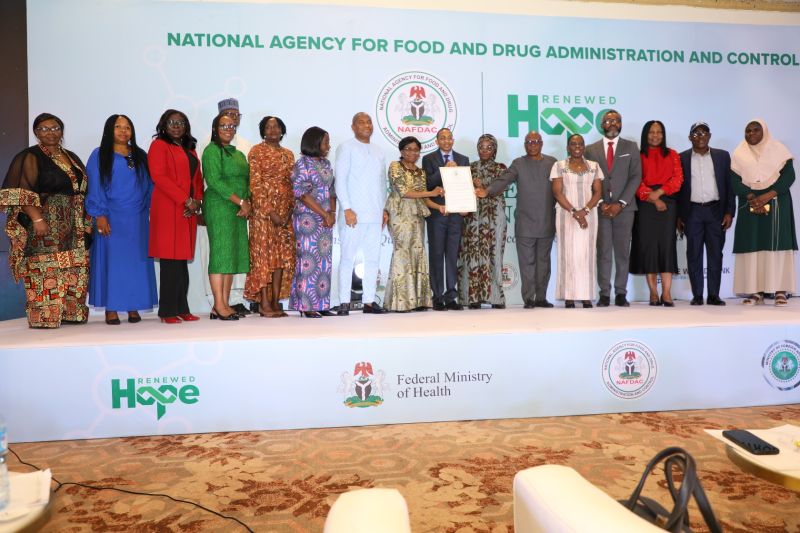
The National Agency for Food and Drug Administration and Control (NAFDAC), in collaboration with the World Bank, the Bank of Industry, and the Federal Ministry of Health and Social Welfare, convened a one-day stakeholder engagement on Monday 5 May 2026 at the Abuja Intercontinental Hotel. Held under the theme "Nigeria's Leadership in Strengthening Medicines Regulation and Public Health in Africa," the forum brought together national, regional, and international stakeholders to discuss regulatory reform and continental collaboration.
The Director-General of NAFDAC, Professor Mojisola Adeyeye, outlined the changes the Agency has pursued in recent years through strategic reforms, digital systems, strengthened enforcement, and alignment with international standards. According to the Agency, these measures have improved transparency, efficiency, and turnaround times across its regulatory processes, while reinforcing its capacity to safeguard public health.
A central theme of the engagement was Nigeria's commitment to the African Medicines Agency (AMA). Stakeholders underscored the role of regional cooperation in pharmacovigilance, manufacturing oversight, and efforts to address substandard and falsified medical products. The forum also examined opportunities to deepen partnerships with development agencies, the private sector, academia, and international organisations, including potential investment in local pharmaceutical manufacturing and regulatory capacity development.
The National Agency for Food and Drug Administration and Control (NAFDAC) has launched an improved version of its Med Safety App, a digital platform that enables healthcare professionals and members of the public to report suspected substandard and falsified (SF) medical products and adverse drug reactions (ADRs) quickly and securely. The Agency has described the launch as a further step in its efforts to strengthen post-marketing surveillance, broaden public participation in medicine safety monitoring, and protect patients from the risks posed by poor-quality and falsified products.
Substandard and falsified medical products remain a significant public health challenge, both globally and in Nigeria, where they contribute to treatment failure, prolonged illness, antimicrobial resistance, disability, and preventable deaths. NAFDAC has framed the response to this problem as requiring a whole-of-society approach, and the upgraded App is intended to give every user a straightforward means of reporting suspicious products and adverse reactions directly to the Agency.
The improved App offers a more user-friendly interface, a simplified reporting process, enhanced data management, improved feedback mechanisms, and the ability to upload photographs and product information in support of regulatory investigations. Users can flag products exhibiting suspicious characteristics, including altered expiry dates, unusual packaging, missing or questionable NAFDAC registration numbers, poor product quality, or unexpected treatment failure, as well as report adverse drug reactions such as unexpected side effects or allergic reactions experienced after use. The App is available for download on Android and iOS devices and can also be accessed through web and desktop versions. The full press release can be accessed here.
Spontaneous reporting systems are a cornerstone of pharmacovigilance, yet under-reporting by both health professionals and patients is a persistent weakness in many national systems, including those across Africa. By lowering the barrier to reporting and supporting submissions with photographic and product-level detail, tools of this kind can improve both the volume and the quality of safety signals available to a regulator. For NAFDAC, a more accessible reporting channel strengthens the evidence base for regulatory action against falsified products and feeds into the wider continental agenda on pharmacovigilance and post-marketing surveillance, an area in which harmonised, data-driven oversight is increasingly central to medicines regulation in Africa.
.jpg)
The Zambia Medicines Regulatory Authority (ZAMRA) hosted a Technical Working Group meeting from 6 to 7 May 2026 to address a regulatory gap affecting products that do not fall within the categories currently defined in the Medicines and Allied Substances Act No. 3 of 2013. The meeting responded to an evolving market in which various substances with medical and hygienic uses occupy a regulatory grey area, creating difficulties for both the Authority and industry stakeholders.
Speaking at the meeting, the ZAMRA Director-General, Mr Makomani Siyanga, set out the challenges arising from the absence of clear pre-market requirements for such products. He noted that this has constrained the Authority's ability to assess their safety and quality, while creating uncertainty for industry through delays in registration, unpredictable market entry, and unclear compliance standards. He also emphasised the importance of stakeholder collaboration in developing the relevant regulatory guidelines.
The Technical Working Group was tasked with detailed consideration of key pre-market requirements, including stability data, labelling standards, and safety profiles for these "other" substances. The resulting document will be circulated to stakeholders for comment before publication.
The South African Health Products Regulatory Authority (SAHPRA) has launched an Online Medicine Directory, described by the Authority as a reflection of its commitment to innovation, transparency, and patient-centred regulation. The platform uses digital technology to widen public access to medicine information and to strengthen confidence in the country's healthcare system.
The directory provides healthcare professionals and consumers with a guide to all SAHPRA-registered over-the-counter (OTC) and prescription medicines available in South Africa. Each listing offers detailed product information on the safe use of OTC and prescription products, accompanied by pack images to assist with identification. The platform also provides downloadable copies of the Patient Information Leaflet (PIL), usually included in the pack, and the Professional Information (PI). Both documents are a mandated requirement under the Medicines and Related Substances Act No. 101 of 1965 (as amended). The Authority advises users who are uncertain about any information on the platform to consult their pharmacist.
Accessible, authoritative information on registered medicines is an important component of medicines safety, supporting informed use, aiding product identification, and offering a reference point against which suspicious or falsified products can be checked. By making registration status, packaging images, and approved product information publicly available in a single location, SAHPRA reduces reliance on unofficial sources and reinforces transparency around what has been authorised for the South African market. Initiatives of this kind also align with the broader move among African regulators towards digital, publicly accessible registers, which support patient empowerment and the wider integrity of the supply chain.
The Ethiopian Food and Drug Authority (EFDA) has launched an Electronic Clinical Trial Regulatory Information System (eCTRIS), part of a broader effort to establish Ethiopia as a preferred destination for high-quality, ethical clinical trials in Africa. The system was unveiled at an official ceremony in Addis Ababa on 21 May 2026.
The new system is intended to modernise clinical trial processes by enhancing transparency, reducing time and resource wastage, and providing researchers with more equitable, streamlined, and efficient services. The EFDA Director-General reported that the Authority has undergone significant institutional and operational restructuring over the past two years. Guided by its legal mandate, these reforms are intended to align Ethiopia's clinical trial oversight with international standards.
In a communiqué dated 29 May 2026, Tunisia's Agence Nationale du Médicament et des Produits de Santé (ANMPS) issued an updated roadmap for the implementation of the electronic Common Technical Document (eCTD) format and for the arrangements governing the submission of marketing authorisation (MA) dossiers. The agency attributed the revision to difficulties that some companies have encountered in moving to electronic formats and to the limited number of dossiers submitted in eCTD or eSubmission format that have so far cleared the electronic validation stage. The ANMPS reiterated that the eCTD remains its reference and preferred format for the electronic submission of MA dossiers, and it encouraged applicants to adopt the format without delay.
Under the revised roadmap, applicants may continue to submit MA dossiers, covering new applications, renewals, variations and transfers, in either eCTD or eSubmission format until 31 August 2026. The submission channels remain unchanged, comprising electronic transmission through a secure transfer platform or the delivery of an electronic medium to the ANMPS, and these arrangements will remain in place until the agency's eCTD portal is opened to the public.
The communiqué also set out extended timelines for managing the existing backlog. For new MA applications lodged during 2025, the deadline for re-submission in eCTD format has been extended to 31 August 2026, except for dossiers that have already received a favourable opinion for prioritisation in respect of 2025. For new MA applications lodged during 2026, the re-submission deadline has been extended to 31 December 2026. The ANMPS indicated that the original chronological order in which dossiers were lodged will be preserved. The agency further stated that it would continue to support applicants through the dissemination of technical and explanatory materials and, where appropriate, the organisation of information sessions, and it invited applicants to prepare for the transition and to align progressively with the applicable technical specifications.
AMA Updates
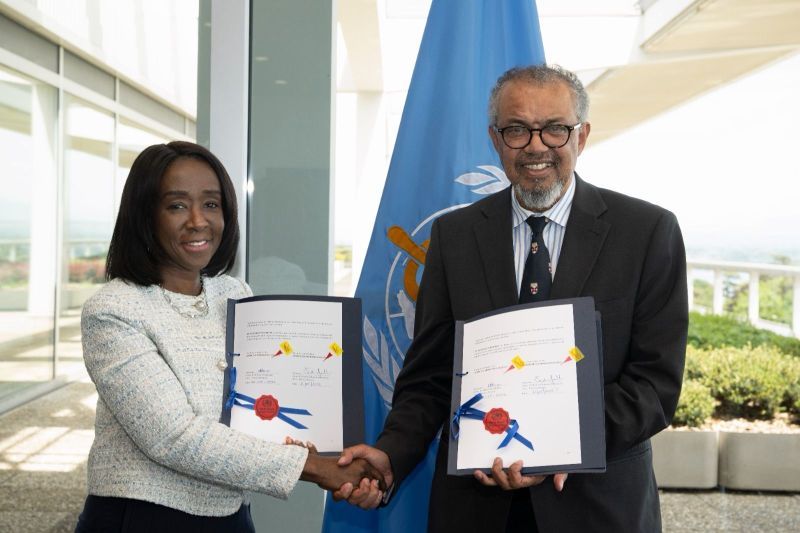
The African Medicines Agency (AMA) and the World Health Organization (WHO) signed a new Framework Agreement for Collaboration on the margins of the Seventy-ninth World Health Assembly (WHA79). The agreement was signed by the Director-General of the AMA, H.E. Dr Delese Mimi Darko, and the Director-General of the WHO, Dr Tedros Adhanom Ghebreyesus, and is intended to strengthen regulatory systems across the continent.
According to the AMA, the agreement will support regulatory harmonisation, convergence, and reliance; stronger surveillance against substandard and falsified medical products; capacity building for regulatory systems and the regulatory workforce; support for local manufacturing and innovation; and faster, more efficient approval pathways for health products. The AMA characterised the framework as a continuation of an existing partnership aimed at improving access to quality-assured health products and noted that strong regulatory systems are central to ensuring timely access to safe, effective, and quality-assured medicines and vaccines as the continent advances its pandemic preparedness.
On the sidelines of the same Assembly, the AMA, together with the United States Pharmacopeia (USP) and Unitaid, convened a high-level dialogue under the theme "From Treaty to Action: Empowering African SMEs Through AMA's Regulatory Innovation Framework." The event brought together health ministers, regulators, development partners, manufacturers, and global health leaders to consider how regulatory alignment can support African small and medium-sized enterprises (SMEs), strengthen local production, and improve access to quality-assured medical products. In her opening remarks, Dr Darko referred to the recent launch of the AMA's SME and Innovation Hub, which is designed to help African manufacturers and innovators navigate regulatory pathways through early scientific advice and clearer routes to market. She noted that the continent's pharmaceutical future depends on manufacturing capacity and predictable regulatory systems capable of supporting innovation and investment.

The African Medicines Agency (AMA) announced that the Federal Republic of Nigeria has deposited its instrument of ratification of the Treaty for the Establishment of the African Medicines Agency, becoming the 32nd African Union (AU) Member State to do so. As the continent's most populous nation and one of its largest economies, Nigeria's accession is regarded by the AMA as a significant addition to the membership underpinning the continental regulatory framework.
The AMA noted that the ratification complements Nigeria's national objectives under the Presidential Initiative for Unlocking the Healthcare Value Chain (PVAC), which links strengthened regulatory systems to the advancement of local manufacturing, innovation, and health security. Through its mandate, the Agency is working to advance regulatory convergence, strengthen national and regional regulatory systems, support local manufacturing, and coordinate continental oversight of medicines and other health technologies. The Agency indicated that Nigeria's participation adds to the collective capacity available to protect public health, improve access, and build more resilient health systems, and it reiterated its call for the remaining AU Member States to sign and ratify the Treaty.
The weight of a treaty-based body such as the AMA rests not only on the number of states that ratify but on the regulatory and economic significance of those that do. The accession of a market the size of Nigeria, with its substantial pharmaceutical sector and large patient population, lends considerable momentum to the continental project, particularly given the role its national authority already plays in regional regulatory affairs. For the broader harmonisation agenda, each major ratification strengthens the case for manufacturers and partners to engage with continental pathways rather than navigating fragmented national systems, while incremental progress towards near-universal membership is what will ultimately determine whether the AMA can function as a genuinely continental regulator.

The African Medicines Agency (AMA) convened the second meeting of the Network of African Reliance Laboratories (NARL) from 25 to 27 May 2026 in Accra, Ghana. Under the AMA's leadership, the network is intended to advance laboratory reliance, regulatory convergence and stronger quality control systems across the continent.
The meeting focused on finalising several operational tools and frameworks. These included the draft NARL Terms of Reference under the AMA framework, together with templates and toolkits for testing result reporting, quality assurance, product-specific guidance, and annual reporting. Through the network, the AMA aims to support a group of African laboratories in strengthening the testing of vaccines, medicines and medical devices, and in improving the detection of substandard and falsified products.
Quality control laboratories are an essential pillar of medicines regulation, yet few African countries individually maintain the full testing capacity required across the range of products entering their markets. A reliance-based network allows authorities to draw on the verified results of trusted laboratories elsewhere on the continent, reducing duplication, easing the burden on under-resourced systems, and supporting faster, more consistent decisions on product quality. Situated within the AMA framework, the NARL reflects the practical operationalisation of reliance at continental level, complementing harmonised registration pathways with shared laboratory capacity and reinforcing the wider drive towards coordinated, resource-efficient regulation across Africa.