The Shaami Regulatory Spotlight - 31
November 9, 2026
Showcasing the latest developments, news and updates from African national medicines regulatory authorities.
Kenya's serialisation date was the month's most consequential development because it turns a traceability policy into a fixed start for packaging, systems and data readiness. Dr Bramuel Tongola, the Pharmacy and Poisons Board's Technical Advisor to the CEO, presented the roadmap at the PharmaReg AfriSummit on 29 September: from 1 January 2027, the requirements will combine batch-level traceability with GS1-compliant unit-level serialisation. PPB has already begun batch declarations for locally manufactured and imported products.
Two other regulators gave manufacturers a defined action. TMDA reminded registrants of medical devices and IVDs that regulation 17(3) of the Medical Devices Regulations, 2015 requires biennial post-marketing surveillance reports, and that failure to submit them may result in regulatory action. MCAZ invited applications for selected essential medicines from the EDLIZ through its expedited review pathway.
Three decisions follow. If you supply Kenya, confirm now that your packs and data can carry GS1-compliant unit-level serialisation by 1 January 2027. If you hold device or IVD registrations in Tanzania, check that every biennial report is filed. If your product appears in MCAZ's Annex 1, compare your dossier with MCAZ's submission requirements before you apply. None of this month's AMA updates set a filing date, including the inauguration of its seven Technical Committees.
Kenya is moving towards an integrated national system that will enable health products to be authenticated and traced across the supply chain, improving visibility and supporting targeted recalls. Presenting on “From Policy to Implementation: Kenya's Roadmap to Full Pharmaceutical Track and Trace and Serialization” at the PharmaReg AfriSummit 2026 on 29 September, Dr Bramuel Tongola, the Pharmacy and Poisons Board Technical Advisor to the CEO, highlighted the country's phased approach to strengthening product authentication and traceability.
The national authentication and traceability system is anchored in the Digital Health Act, 2023. PPB has begun batch declarations for locally manufactured and imported products and, in collaboration with the Digital Health Agency, developed a national product catalogue. From 1 January 2027, the requirements will combine batch-level traceability with GS1-compliant unit-level serialisation, and longer-term implementation will focus on broader serialisation, advanced analytics, system integration and international interoperability.
Here is what I would do differently. Confirm now whether your Kenyan packs and master data can carry GS1-compliant unit-level serialisation by 1 January 2027, because batch declarations have already started and the unit-level layer follows. The session emphasised that effective traceability depends on accurate product and supply-chain event data, so align your product and batch data with the national product catalogue. Confirm with PPB which product categories the January requirement covers before you commit to packaging line changes.
The Medicines Control Authority of Zimbabwe (MCAZ) invites interested applicants to submit applications for the registration of selected essential medicines included in the Essential Drugs List and Standard Treatment Guidelines for Zimbabwe (EDLIZ) through the expedited review pathway. The targeted call forms part of the Authority's efforts to support the timely availability and sustainable supply of priority essential medicines in Zimbabwe. The selected medicines are listed in Annex 1 of Circular 25 of 2026 and, if registered, would enhance access to safe, efficacious and quality-assured medicines for the Zimbabwean patient, as prescribed in the 9th Edition of the EDLIZ (2025).
Applicants are required to submit complete registration dossiers for each product in accordance with the applicable MCAZ submission requirements, which are available through the MCAZ Information Portal under Registration and Market Authorisation. The Authority will levy expedited fees in line with MCAZ fee schedule items 7(d)(i) and 7(d)(ii), and products listed in Annex 1 will be considered in this call.
Here is what to do. Check Annex 1 against your portfolio first, because only the products listed in it will be considered in this call. Assemble a complete dossier for each product before you apply and build the expedited fee under items 7(d)(i) and 7(d)(ii) into the registration budget. Read Circular 25 of 2026 for the closing date and any further conditions before you commit resources.
The Tanzania Medicines and Medical Devices Authority (TMDA) reminded all registrants, Marketing Authorisation Holders (MAHs), manufacturers and other relevant stakeholders of their obligation to comply with the Post-Marketing Surveillance (PMS) reporting requirements applicable to registered medical devices and in vitro diagnostics (IVDs). Under regulation 17(3) of the Medical Devices Regulations, 2015 (GN. No. 315), every registrant is required to submit biennial PMS reports to TMDA, including information on adverse events and incidents associated with registered medical devices or IVDs.
PMS reports shall provide adequate information on the quality, safety and performance of the registered device or IVD, including, where applicable, adverse events and incidents, complaints, safety signals identified through post-marketing monitoring, Field Safety Corrective Actions (FSCAs), Field Safety Notices (FSNs), recalls, corrective actions, vigilance information and other relevant information. PMS reporting does not replace the obligation to promptly report adverse events, incidents, safety signals, FSCAs, recalls or other reportable events as separately required. Failure to submit required PMS reports or other mandatory post-marketing safety information may constitute non-compliance and may result in appropriate regulatory action by the Authority.
As your next step, audit every device and IVD you hold registered in Tanzania against the biennial cycle and submit any outstanding reports, because TMDA urged registrants and manufacturers to ensure timely submission of all outstanding and subsequent reports. Keep the two channels apart in your procedures, because the biennial report and the prompt reporting of events run separately. Check that each report is complete, accurate and current before it leaves your quality system.
MCAZ launched its Client Service Charter. The launch forms part of the Authority's ongoing commitment to transparent, accountable and responsive service delivery, and stakeholders including the Pharmaceutical Wholesalers Association, Pharmacists Council, Animal Health Committee, Nurses Council and patient advocacy groups attended. The Charter sets out the Authority's service commitments and timelines, giving clients and stakeholders a clearer understanding of the services offered, the requirements for accessing them and the standards against which service delivery can be assessed. The Charter is available on the MCAZ portal.
EDA delivered a training programme for Rwanda FDA on vaccines and biological products.

The programme, implemented under the VaccRelease 2.0 project of the German Global Health Protection Programme (GHPP), aims to enhance the technical and regulatory capabilities of staff in the Vaccines and Biological Products Testing Unit at Rwanda FDA and to support its efforts to establish and develop a lot release system for vaccines and biological products, in alignment with international regulatory standards and recognised best practices. Over five training days, it covered Quality Management Systems (QMS) and the requirements of ISO/IEC 17025:2017 for the competence of testing and calibration laboratories, High-Performance Liquid Chromatography (HPLC) techniques, decision making procedures during the lot release process, and the review of the Lot Summary Protocol and related vaccine documentation. EDA experts and specialists in laboratory assessment, quality control of biological products and lot release procedures delivered it through technical lectures, workshops, case studies, practical applications and knowledge sharing sessions.
EDA's Chairman met US FDA and US Department of State officials at AMA Week 2026 in Kigali.

Dr Ali El-Ghamrawy, Chairman of the Egyptian Drug Authority, met Ms Misha Sampson, Director of the US Food and Drug Administration's African Medicines Agency Liaison Office, in the presence of officials from US FDA's Office of Global Policy and Strategy and the US Department of State's Office of Global Health Security and Diplomacy, to discuss ways to strengthen regulatory cooperation and expand the partnership between the two sides. The meeting explored opportunities to expand technical cooperation and exchange expertise in post-marketing surveillance of pharmaceutical products, pharmacovigilance and Good Manufacturing Practice (GMP) inspections. Discussions also addressed strengthening regulatory reliance and alignment with international standards, increasing reliance on regulatory decisions issued by reference regulatory authorities, and supporting institutional and technical capacity building.
34 African Union Member States have now ratified the AMA Treaty. The Republic of Togo and the Federal Republic of Nigeria deposited their instruments of ratification of the Treaty for the Establishment of the African Medicines Agency (AMA) just five days apart, and AMA congratulated both. The AMA Director General (DG) noted that Togo has taken important steps to establish a specialised national regulatory authority, and that Nigeria's National Agency for Food and Drug Administration and Control (NAFDAC) retained its World Health Organization Maturity Level 3 (ML3) in 2025. AMA’s ambition is to build on these national strengths, facilitating regulatory reliance, work sharing and greater harmonisation while respecting the sovereign regulatory decisions of Member States.
AMA inaugurated its Technical Committees in Kigali during AMA Week
Established under the AMA Treaty, the seven Technical Committees carry out scientific assessments and reviews, including of dossiers and clinical trial applications, and provide scientific opinion to AMA. Members were selected through an open, competitive and merit-based process, and they serve in an independent scientific capacity, guided by rigorous scientific standards, impartiality and integrity. The Committees will support continental collaboration in strengthening medical products regulation across Africa.
An AMA delegation visited Japan to explore cooperation with PMDA and MHLW.
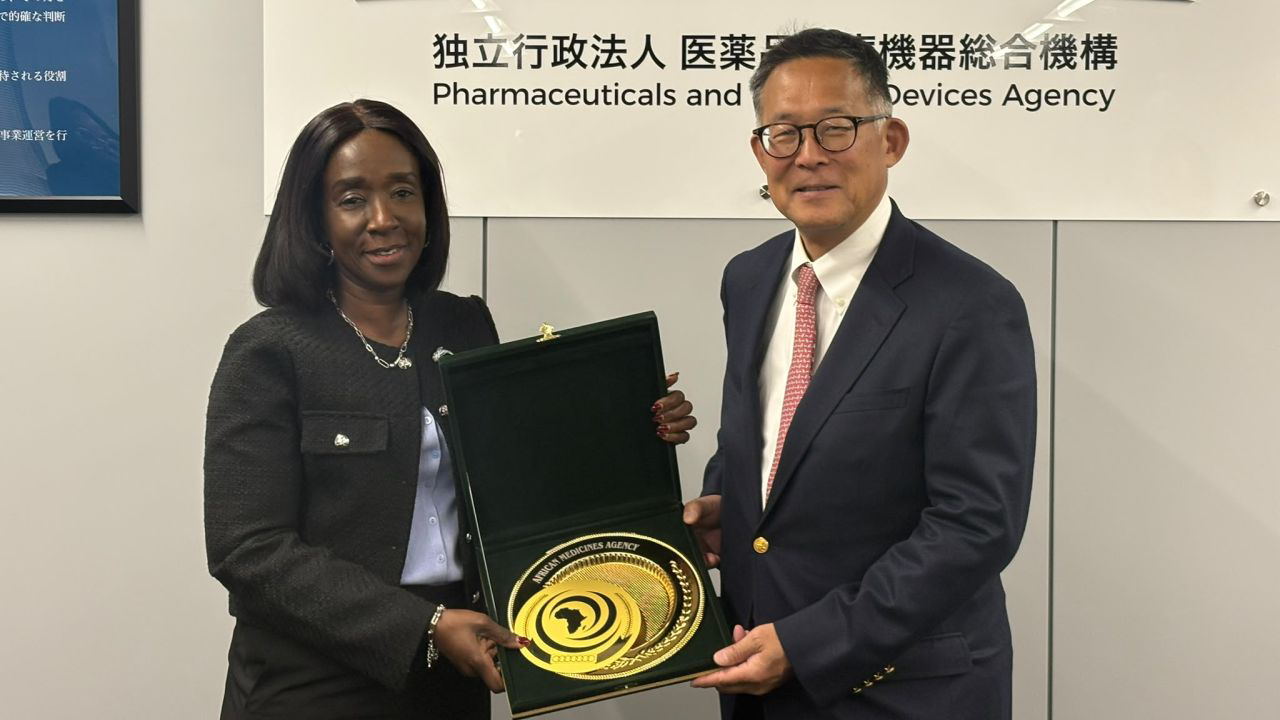
The delegation explored opportunities for cooperation between AMA, Japan's Pharmaceuticals and Medical Devices Agency (PMDA) and the Pharmaceuticals Safety Bureau of the Ministry of Health, Labour and Welfare (MHLW), including the exchange of knowledge and regulatory experience, and engaged representatives of Japan's medical devices industry on greater collaboration with Africa around innovation, manufacturing and technology transfer. AMA is working with National Regulatory Authorities (NRAs), Regional Economic Communities (RECs) and partners to build a more coherent and predictable regulatory environment across Africa, with a focus on reducing unnecessary duplication, strengthening reliance and work sharing, and making it easier for manufacturers to navigate regulatory processes across countries, while respecting national regulatory decision making. Africa presents significant opportunities for manufacturers and innovators, with a population of more than 1.5 billion people, growing demand for quality-assured medical products and continued efforts to strengthen regulatory harmonisation.
Supplying Kenya, Tanzania or Zimbabwe? Do you know which traceability, post-marketing reporting and expedited review requirements apply to your products, market by market?
The Assessment Tool flags requirements by market and product type. If you are registering a product in an African market, try the platform here: Regulatory Assessment Tool