The Shaami Regulatory Spotlight - 30
October 6, 2026
Showcasing the latest developments, news and updates from African national medicines regulatory authorities.
BoMRA's Class A device roadmap was the month's most consequential development because it gave manufacturers a fixed end date. Voluntary notification opened on 1 October 2026 for Class A devices and IVDs, veterinary-use-only devices and Class A dental devices, and BoMRA set 1 April 2027 as the date from which notification becomes mandatory.
Three other regulators set entry conditions. The WA-MRH expression of interest, open year-round, covers joint assessment across nine therapeutic areas, with NAFDAC as lead coordinating authority. SAHPRA published its reference product guideline, which defines when an overseas comparator is acceptable for a South African generic. TMDA joined MDSAP as an Affiliate Member and has access to audit reports and certification data for its desk reviews.
Four filing decisions follow. Manufacturers of Class A, dental and veterinary devices for Botswana have until 31 March 2027 to notify voluntarily, at an application fee of USD 185, or USD 92.50 for fully local manufacture. Generic sponsors using an overseas comparator for South Africa need comparative dissolution data against the South African product in the dossier. Manufacturers with products in the nine WA-MRH therapeutic areas can submit to NAFDAC at any time, in the ECOWAS CTD format.
Bakani Ncube
BoMRA issued its roadmap notice for Class A and notifiable medical devices. Voluntary notification opened on 1 October 2026 and stays voluntary until 31 March 2027. It covers Class A devices including Class A IVDs, veterinary-use-only devices including IVDs, and Class A dental devices and applicable dental consumables. Notification registration becomes mandatory on 1 April 2027, when BoMRA will enforce import controls and compliance requirements.
The application fee is USD 185 or the Pula equivalent. BoMRA reduces it by 50% for fully local manufacture (USD 92.50) and by 25% for partial local manufacture (USD 138.75). It has also waived import controls and permit requirements for veterinary-use-only and dental devices and their consumables until 31 March 2027. The waiver names only those two lines, not Class A devices or IVDs for human use. The full notice can be accessed here.
Here is what to consider. Classify the product first, because BoMRA requires applicants to verify risk class and pathway before submitting. File inside the voluntary window, because the permit waiver ends on the day notification registration becomes mandatory. Check retention fees too: BoMRA reminded holders that unpaid devices face suspension or removal from the register, which revokes market authorisation and import eligibility. Registration for Class B, C and D devices continues under the earlier roadmap.
SAHPRA published its Guideline for Selection of Reference Products for Applications of Generic Medicines. Applicants must demonstrate bioequivalence against the South African reference product, using the in vivo and in vitro studies set out in SAHPRA's quality and bioequivalence guideline. SAHPRA aligned the new guideline with its adoption of ICH M13.
A bioequivalence study using an overseas reference product may be acceptable where the applicant demonstrates similarity between the overseas and South African products through comparative dissolution. The guideline covers comparator choice for bioequivalence and biowaiver applications, for comparative dissolution studies, and for non-solid and semi-solid products. It excludes products containing chemical entities or active moieties not registered in South Africa, which cannot serve as reference products to support the safety and efficacy of a generic application.
The decision it affects is comparator procurement. A sponsor planning a study against an overseas comparator should obtain the South African reference product and run comparative dissolution against it before the study starts, because the overseas comparator is acceptable only where similarity is shown. If the products are not similar, the study should use the South African product; otherwise, the sponsor risks a completed study that does not meet the guideline.
The WA-MRH Secretariat launched an Expression of Interest for products eligible for joint evaluation under the ECOWAS Joint Assessment Procedure, and the EOI is open all year. Manufacturers submit dossiers to the Lead Coordinating national medicines regulatory authority (NRA), NAFDAC in Nigeria, which completes screening and passes them to the WA-MRH Secretariat for expert assessment.
The EOIs cover nine therapeutic areas: antimalarials; vaccines, immunoglobulins, well-characterised biologics, biosimilars and blood products; antibacterials; neglected tropical diseases; reproductive health commodities; anti-tuberculosis medicines; life-saving medicines; HIV infections and related diseases; and IVDs for SARS-CoV-2. WA-MRH has published the ECOWAS Joint Assessment Procedures with sample schedules for allopathic products, and requires dossiers in the ECOWAS Harmonised CTD format, available on the WAHO website.
ZAMRA began a five-day training for Human Medicines Assessors on 28 September at Cresta Golfview Hotel, and it runs to 2 October. The training covered the evaluation of bioequivalence studies and related clinical evidence for generic medicines and aimed to improve consistency and scientific rigour in dossier assessment. Participants were encouraged to explore clinical trial opportunities, given Africa's historically limited participation in clinical research.
A team of inspectors led by Dr Karim Wanga of IGAD paid a courtesy call on ZAMRA Director General Makomani Siyanga before joint coached and supportive cGMP inspections scheduled for 21 to 25 September at Yashi Life Sciences Limited and NRB Pharma (Z) Limited. The inspections, delivered under the World Bank-supported Health Emergency Preparedness, Response and Resilience Multi-Phase Programme (HEPRR-MPA) programme that IGAD implements with Eastern, Central and Southern Africa Health Community (ECSA-HC), are designed to identify gaps, support CAPA development and assess inspector competencies. The results are to inform targeted inspector training.
Zambia's Pharmaceutical Project Implementation Team made a technical benchmarking and working visit to AKUMS Drugs and Pharmaceuticals Limited in India from 19 to 25 September to review facility design, production flows, utilities, equipment configuration, quality systems and GMP. The visit followed Cabinet's approval on 6 June 2025 of a joint venture to manufacture essential medicines in Zambia, in which Government holds 49% and AKUMS 51%. Government incorporated the National Pharmaceuticals Company Limited in 2025 as the special purpose vehicle, with the Minister of Finance holding 99% and the Zambia Medicines and Medical Supplies Agency (ZAMMSA) 1%. The visit aimed to identify design deficiencies before construction and so reduce rework, delays and regulatory non-conformities.
Tanzania's TMDA became an Affiliate Member of the Medical Device Single Audit Program (MDSAP). Membership gives TMDA access to official MDSAP audit reports, QMS certification information from participating manufacturers and the participating facility directory, which TMDA intends to use to strengthen desk reviews and reduce duplication of audits. The directory lists manufacturing sites, audit dates and the responsible MDSAP Auditing Organizations. TMDA considers membership to allow closer engagement with the international medical device regulatory community and better use of regulatory resources, with the aim of timely access to safe, effective and high-quality devices for the Tanzanian population.
WHO and BoMRA launched a Good Clinical Practice workshop in Gaborone on 21 September for regulators from Eswatini, Gambia, Liberia, Seychelles, Sierra Leone and Zambia, alongside BoMRA clinical trial and pharmacovigilance reviewers. The AVAREF Secretariat at the WHO Regional Office for Africa organised the workshop, which Germany's Paul-Ehrlich-Institut funded and it centred on hands-on GCP inspection under the revised ICH E6(R3), including an on-site inspection at a Botswana clinical trial site that is a first for several participants. As it stands, Africa accounts for under 3% of global clinical trial activity despite a quarter of the disease burden, and 10 of the continent's 55 NRAs have reached WHO Maturity Level 3.
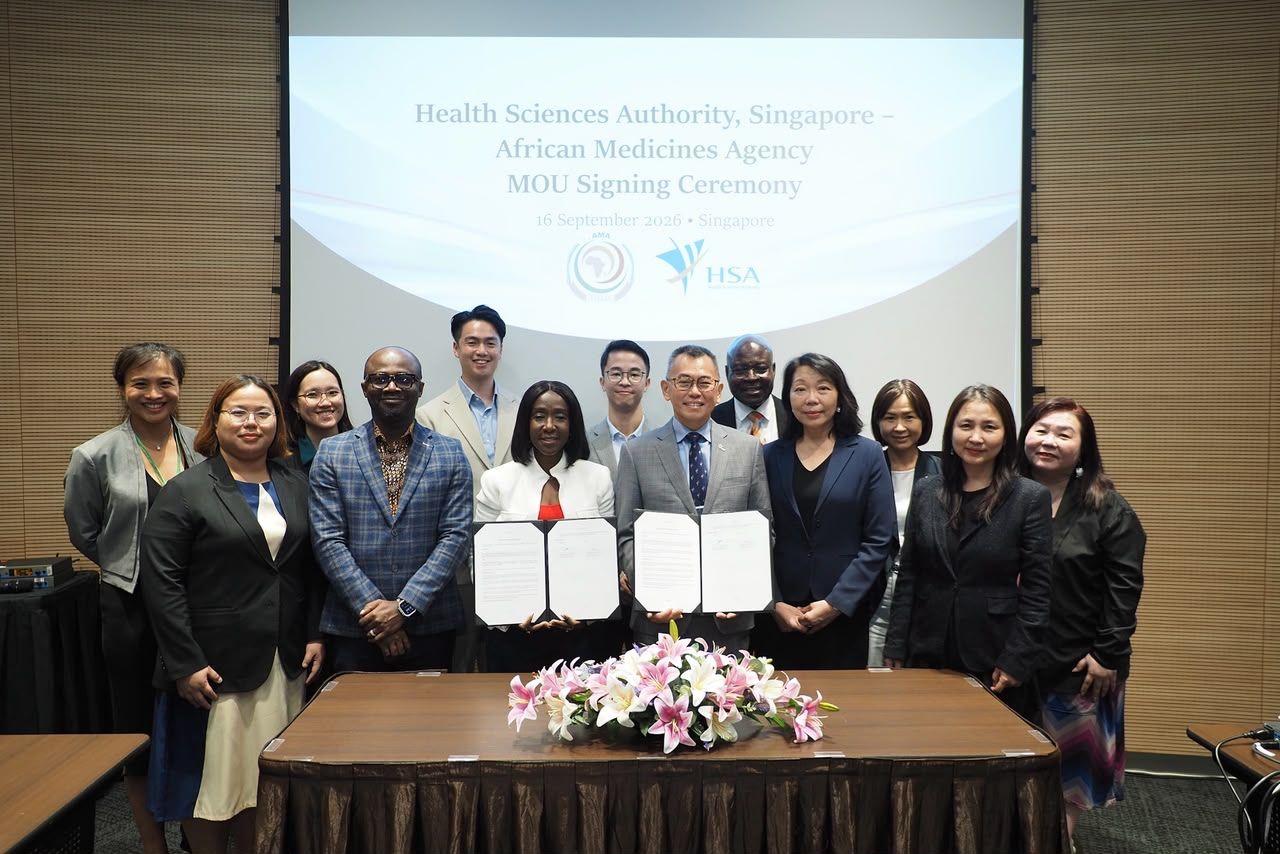
AMA Director General Dr. Delese Mimi Darko and Health Sciences Authority (HSA) Chief Executive Officer Adjunct Professor (Dr) Raymond Chua signed a Memorandum of Understanding in Singapore on 16 September, on the sidelines of the International Medical Device Regulators Forum. The agreement sets a framework for scientific and information exchange and regulatory capacity strengthening. HSA's announcement listed four areas of cooperation: exchange of regulatory information, collaboration on regulatory science and practices, capacity building and technical review, and exploring appropriate use of HSA's approvals and assessments as references. AMA welcomed the partnership as a means to strengthen regulatory systems and support timely access to safe, quality and efficacious medical products for patients across the globe.


.png)