MAA Regulatory Spotlight - 24
April 9, 2026
Showcasing the latest developments, news and updates from African national medicines regulatory authorities.
This edition of the Market Access Africa Regulatory Spotlight captures a series of regulatory developments across Africa, reflecting sustained progress towards stronger oversight systems, deeper regional collaboration and more efficient pathways for access to quality-assured health products.
In North Africa, regulatory advancement is increasingly driven by digital transformation and supply chain integrity initiatives. A notable development is the launch of Egypt’s Pharmaceutical Track and Trace System, which establishes an integrated national digital platform to track medicines from manufacture to patient. This phased rollout, beginning with high-risk imported Schedule I products, represents a significant step towards end-to-end traceability, improved transparency in pharmaceutical distribution, and strengthened controls against counterfeit and substandard medicines.
In West Africa and broader continental collaboration frameworks, attention is focused on harmonising regulatory standards for biological products. The 5th Vaccine Regulatory Workshop in Accra convened African National Regulatory Authorities, national control laboratories, and international partners to advance harmonised lot release systems for vaccines and other biologicals. The discussions reinforced the importance of coordinated regulatory review of product dossiers and laboratory data to ensure consistent quality standards, while addressing growing complexity in vaccine technologies and increasing globalisation of manufacturing.
In East Africa, regulatory strengthening is being advanced through both legislative reform and regional pharmacovigilance collaboration. Kenya, through the Pharmacy and Poisons Board, has enhanced its safety monitoring systems under the AU-3S Programme in partnership with AUDA-NEPAD, improving pharmacovigilance capacity and safety surveillance. In Uganda, Parliament has passed the National Drug and Health Products Authority Bill, 2025, introducing a comprehensive overhaul of the regulatory framework. The new law expands regulatory scope to include a wide range of health products, strengthens enforcement mechanisms, introduces traceability requirements, and provides for controlled access to unregistered medicines under defined emergency and research conditions.
In Southern Africa, regulatory systems are being strengthened through capacity building, stakeholder engagement and transitional regulatory implementation measures. The Botswana Medicines Regulatory Authority (BoMRA) hosted a regional Clinical Trials Inspections Training under the SEARCH II Project, strengthening inspection capacity and advancing WHO Maturity Level 3 readiness through regional collaboration and technical exchange. In parallel, BoMRA has revised timelines for the mandatory listing of cosmetic products, extending the voluntary compliance period to support industry readiness and structured implementation of regulatory requirements. South Africa’s SAHPRA is also engaging stakeholders on its Priority Review Pathway Framework, aimed at accelerating assessment of health products addressing unmet medical needs, public health priorities and supply constraints, while supporting local manufacturing priorities.
In the Eastern and Horn of Africa region, IGAD has advanced its Medicines Regulatory Harmonization programme through a structured Expression of Interest process for joint assessment of medicinal product dossiers. This mechanism enables participating National Regulatory Authorities to jointly evaluate products using Common Technical Document standards, supported by coordinated scientific review and manufacturing site inspections. The approach is designed to reduce duplication, strengthen regional reliance and accelerate access to essential medicines across Member States.
Collectively, these developments show a clear regional trajectory towards more harmonised, transparent and efficient regulatory systems. Across Africa, regulators are increasingly combining legal reform, digital tools, regional reliance models and capacity strengthening initiatives to improve oversight of medicines and health products. The overarching direction remains consistent: strengthening regulatory systems to ensure timely access to safe, effective, and high-quality health products across the continent.
The Parliament of Uganda passed the National Drug and Health Products Authority Bill, 2025, introducing comprehensive reforms to the regulation of medicines and health products in Uganda, including provisions for the controlled use of unapproved drugs in life threatening situations.
The Bill, approved at Third Reading on 26 March 2026, establishes the National Drug and Health Products Authority as the central regulatory body responsible for overseeing the manufacture, importation, exportation, distribution, and use of drugs and other health products in the country. It replaces the 1993 regulatory framework and expands the Authority’s mandate to include a wider range of products, such as vaccines, diagnostics, biologicals, medical devices, cosmetics and nutritional supplements.
The legislation introduces stringent penalties aimed at addressing illegal activities within the pharmaceutical sector. Manufacturing or distributing drugs without a licence will attract penalties of up to 10 years imprisonment or fines of up to Shs200 million, while illegal importation of drugs will carry similar sanctions for both individuals and corporate entities.
Stricter controls have also been introduced for drug advertising. Under Clause 46, all advertisements must be approved by the Authority, and and no product may be promoted as a drug if it is not registered as such or for uses outside its approved purpose. Offences under this provision carry fines of up to Shs400 million or imprisonment of up to 15 years, with corporate penalties reaching up to Shs3 billion.
A key feature of the reform is Clause 21, which allows the Authority to authorise the use, importation or distribution of unregistered products under defined conditions, including clinical trials, scientific research, personal use, and compassionate use in emergencies. The legislation also introduces a listing system to improve traceability and oversight of certain medicines, alongside mandatory lot release certification for vaccines, biologicals and diagnostics prior to market authorisation.
Additional provisions extend regulatory control to cosmetic products, with penalties of up to Shs200 million for manufacturing or distributing cosmetics without a licence. The Minister of Health is also empowered to prohibit the importation of specified cosmetic products deemed harmful, through statutory instruments published in national newspapers.
The law further strengthens supply chain integrity through requirements for unique product identifiers to enhance traceability and combat counterfeits. It also grants regulators authority to enforce minimum distance requirements between pharmacies to support equitable access to medicines.

The 5th Vaccine Regulatory Workshop, held in Accra, Ghana from 26 - 27 March 2026, brought together key stakeholders from across the African regulatory landscape and international partner organisations to advance collaboration on vaccine oversight. The meeting convened African National Regulatory Authorities (NRAs), National Quality Control Laboratories, and technical experts from leading global institutions, under the coordination of the African Medicines Agency and hosted by Ghana’s Food and Drugs Authority.
The workshop focused on discussions and technical work towards a joint path forward for harmonised regulations for lot release practices of vaccines and other biologicals. Lot release refers to the process of evaluating each individual lot of a licensed product before granting approval for its release onto the market. This process is conducted for vaccines and other biologicals in most countries and typically involves the review of manufacturers’ production data and quality control test results (product summary protocol) by NRAs and National Control Laboratories. In some cases, this review may be supplemented by laboratory testing conducted by a national control laboratory or by an agency or contracted laboratory on behalf of the regulatory authority.
The importance of this work is underscored by broader, well recognised challenges facing lot release systems globally. These include the increased number of vaccines now licensed and in use, the growing complexity of new vaccines requiring more sophisticated testing approaches and the increasing globalisation of the pharmaceutical industry. These factors collectively place a growing burden on NRAs and industry, particularly in developing countries where regulatory capacity and resources may be limited, and where systems may already be under strain from managing traditional vaccines, let alone newer biotechnology products.
In this context, advancing harmonised approaches to lot release is critical. It supports more efficient regulatory processes while maintaining oversight of safety, quality and effectiveness. Ultimately, this contributes to ensuring the availability of safe, quality and effective medical products across the continent.
The Botswana Medicines Regulatory Authority (BoMRA) has announced an extension to the implementation timeline for the mandatory listing of cosmetic products, following its earlier public notice indicating that the requirement would take effect from 1 April 2026.
In an update issued on 12 March 2026, BoMRA informed stakeholders and members of the public that the transition to mandatory listing has been postponed to 31 December 2026. The extension is intended to provide stakeholders with additional time to submit product listings, minimise disruptions to business operations and allow for further stakeholder engagement.
Under the revised timeline, the listing of cosmetic products will remain voluntary until 31 December 2026. During this period, stakeholders are encouraged to continue submitting product information in preparation for full compliance.
Mandatory listing will take effect from 1 January 2027 to 31 March 2027, during which all cosmetic products placed on the Botswana market must be listed. No listing fees will be charged during this initial mandatory phase. From 1 April 2027, mandatory listing will continue, and applicable fees will be introduced, with further details to be communicated in due course.
Manufacturers, importers, and distributors are required to submit their products through the BoMRA Regulatory Information Management System (BRIMS).
BoMRA has encouraged stakeholders to make full use of the transition period to ensure that all cosmetic products intended for the Botswana market are submitted for listing ahead of the mandatory deadline.
The Botswana Medicines Regulatory Authority (BoMRA) hosted a regional Clinical Trials Inspections Training under the SEARCH II Project in Gaborone, bringing together regulatory authorities, research institutions from across Southern Africa, and international partner organisations.
Officially opening the training, Chief Executive Officer Dr. Seima Dijeng highlighted the importance of collaboration in strengthening regulatory systems and safeguarding public health. The training attracted delegates from Eswatini, Lesotho, Namibia, Zambia, Mozambique, and Botswana, alongside global partners including IMPACTE Consultants for Development, Fundação Manhiça, and R-Evolution Worldwide Community.
Over the past six years, BoMRA has prioritised building technical capacity, particularly in clinical trials oversight. The Authority is currently progressing towards WHO Maturity Level 3 (ML3), a benchmark for a well-functioning and integrated regulatory system. In December 2025, Botswana marked a significant milestone with the approval of the Medicines and Related Substances Act, strengthening the legal framework for clinical trials oversight, medicines safety, regulatory governance, and supporting regional harmonisation.
Dr. Dijeng emphasised that clinical trials regulation is critical to ensuring ethical conduct, participant protection and scientific integrity. He noted that initiatives such as the SEARCH II Project play an important role in promoting knowledge exchange, strengthening inspection capacity, and supporting harmonised regulatory approaches across borders.
Delegates were encouraged to share expertise and build lasting professional networks to sustain collaboration beyond the training. The three-day programme is expected to significantly enhance clinical trials inspection capacity and contribute to stronger regulatory systems across Southern Africa.
The importance of this initiative lies in its direct contribution to strengthening oversight of clinical research in the region. Enhanced inspection capacity supports more robust and consistent regulatory practices, helping to ensure that clinical trials are conducted safely, ethically, and to high scientific standards. This, in turn, reinforces public trust, supports regional collaboration and contributes to improved health outcomes across the region.
The Intergovernmental Authority on Development (IGAD), through its Health and Social Development Directorate, has issued an invitation for Expressions of Interest (EOI) for the joint assessment of dossiers of medicinal products under its Medicines Regulatory Harmonization (MRH) Initiative.
IGAD established an Expert Working Group on Medicines Assessment and Registration (EWG-MAR) in 2019 as part of the MRH programme. The group has developed IGAD joint dossier assessment guidelines, which provide a framework for regional collaborative assessments among IGAD Member States, namely Ethiopia, Kenya, Uganda, Sudan, Somalia, South Sudan, and Djibouti. In addition, the EWG-MAR has identified priority product categories and molecules eligible for joint assessment, based on the burden of disease in the region, commonly used medicines, and those with a high risk of antimicrobial resistance.
This call invites applicants to submit an Expression of Interest for medicinal products to be jointly evaluated by NRAs in the region through the IGAD joint assessment procedure. To qualify, applicants must submit a completed EOI form in the prescribed format to the IGAD MRH Secretariat and provide the medicinal product dossier electronically via the Accumulus platform. Access details and guidance on the use of the platform will be shared with applicants whose submissions meet the screening criteria.
Under the joint assessment process, IGAD, in collaboration with participating NRAs, will coordinate the scientific evaluation of submitted dossiers using the Common Technical Document format. This review will assess compliance with regional and international requirements for quality, safety and efficacy. Manufacturing sites will also be inspected to verify compliance with current Good Manufacturing Practices.
The assessment process will follow five critical steps. Where a positive recommendation is issued at the regional level, applicants will proceed to submit applications for product registration to the relevant NRAs. These authorities will rely on the decision of the EWG-MAR to grant market authorisation within a period of 90 days.
IGAD plans to implement the joint assessments in a phased approach. No fees will be charged for this round of assessments under the current EOI. However, engagement with industry stakeholders is anticipated to inform future fee recovery mechanisms for sustainability. Applicants will continue to pay the applicable fees to individual NRAs at the point of national registration following a positive regional recommendation.
The importance of this initiative lies in its role in advancing regional collaboration and streamlining regulatory processes. Joint assessments can reduce duplication of effort, accelerate access to essential medicines and ensure consistent evaluation standards across participating countries. This contributes to improved availability of quality-assured medicinal products in the IGAD region while supporting more efficient use of regulatory resources.
Further details on the Expression of Interest, procedures, and eligible products are available on the IGAD website.
ZAZIBONA convened a Quality Circle Meeting on Product Evaluation on 26 March 2026, bringing together regulatory experts to advance the development and alignment of technical guidelines across participating countries.
The meeting featured a series of focused presentations and discussions covering key aspects of product evaluation, including the objectives and expectations for the initiative. Technical sessions addressed Active Pharmaceutical Ingredient (API) Quality Guidelines and Finished Pharmaceutical Product (FPP) Quality Guidelines, alongside discussions on the ZAZIBONA guidelines drafting process and updates on the centralised procedure. Additional presentations focused on Bioequivalence and Biopharmaceutics Guidelines, contributing to efforts to ensure consistent scientific and technical standards in product evaluation across the region.
As part of the ongoing guideline development process, stakeholders have been invited to review the draft documents and submit their comments using the prescribed template by 30 April 2026. Stakeholder input is critical to ensuring that the final guidelines are comprehensive, harmonised, and aligned with both regional and international best practices. Stakeholders are encouraged to engage actively and seek clarification where required.
ZAZIBONA contact details can be found here.
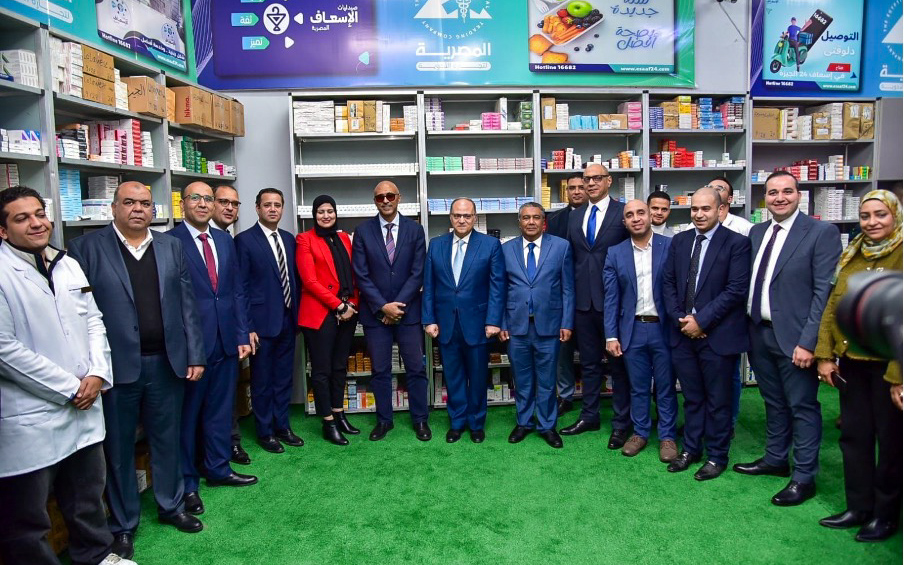
The Egyptian Drug Authority (EDA) launched the first phase of the Pharmaceutical Track and Trace System during a field visit to Giza Ambulance Pharmacy. The system represents a national digital platform designed to track pharmaceutical products from the manufacturing stage through to the patient, as part of broader state efforts to strengthen pharmaceutical security and enhance regulatory oversight.
The initiative forms part of Egypt’s comprehensive plan to improve the safety and quality of medicines and to ensure the availability of safe, quality assured pharmaceutical products. It also supports efforts to combat commercial fraud, as well as falsified and expired medicines.
A live demonstration showcased the system’s practical application within the pharmacy setting, illustrating how each medicine pack can be tracked using a unique serial number. This approach strengthens transparency and enhances oversight across pharmaceutical supply chains, while improving control over the circulation of medicines in the national market.
The first phase of implementation focuses on imported Schedule I products (narcotic substances) reflecting their specific regulatory nature and the need for strict control over their distribution. The system is expected to support the fair and organised availability of these products across all governorates through ambulance pharmacies. A phased rollout is planned, with the system to be extended to other imported pharmaceutical products as part of a broader strategy to achieve comprehensive national coverage.
Digital traceability of medicines represents a strategic step in strengthening oversight and ensuring that safe medicines reach every Egyptian citizen. This system establishes a new phase of transparency and digital control over pharmaceutical supply chains, with every medicine pack becoming fully traceable within an integrated nationwide system.
Egypt is adopting international best practices in pharmaceutical tracking to safeguard public health and enhance the efficiency of the regulatory system. By enabling end-to-end visibility of pharmaceutical products, the system supports efforts to prevent the circulation of substandard and falsified medicines, enhances accountability and reinforces public confidence in the healthcare system.
The South African Health Products Regulatory Authority (SAHPRA) has invited stakeholders to submit comments on its guideline titled Guideline for Priority Review of Health Product and Only Type II Variation Applications. The framework is designed to provide for the priority review, assessment and registration of health products that address unmet medical needs and are of significant public health interest.
The Priority Review Pathway is intended to facilitate improved accessibility and availability of critical health products by expediting regulatory processes. It applies to New Chemical Entities, new biological medicines, interchangeable multi-source (generic) medicines, and biosimilars, covering both new registrations and Type II variations.
The framework outlines specific criteria under which health products may be considered for priority review. These include products that address unmet clinical needs where no registered treatments exist in the South African market, as well as those relevant to public health or animal health emergencies, guided by existing SAHPRA frameworks. Consideration is also given to products intended for limited patient populations, including orphan diseases, and those aligned with national priorities as determined by the National Department of Health.
Additional criteria include products where there are concerns regarding security of supply, as guided by national authorities, and those that are locally manufactured in South Africa. Under the first phase of implementation of the Local Manufacturing Policy (CEO04), priority consideration will be given to categories such as New Chemical Entities, biological medicines, vaccines and biosimilars. At this stage, the framework excludes medical devices, in vitro diagnostics, and complementary medicines from its scope.
Stakeholders are invited to submit comments on the guideline by 30 April 2026. Supporting documents, including the comments submission form, are available on the SAHPRA website.

Kenya has recorded measurable progress in strengthening the safety monitoring of health products following sustained collaboration between the Pharmacy and Poisons Board and AUDA-NEPAD under the AU-3S Programme.
The progress, anchored in a Sub-Delegation Agreement operationalised in November 2021, has enhanced the country’s pharmacovigilance system through targeted capacity building, improved safety surveillance and expanded knowledge sharing across African regulatory authorities.
This partnership has further strengthened coordination and technical capacity, positioning Kenya to more effectively detect, assess and respond to safety concerns related to medicines and other health products.
During an engagement held on 26 March 2026, Acting Chief Executive Officer Dr. Ahmed Mohamed commended AUDA-NEPAD for its continued support, noting that the collaboration has played a key role in advancing regulatory systems. He reaffirmed the Board’s commitment to sustaining the progress achieved and to further strengthening safety monitoring to safeguard public health.
The importance of this development lies in its contribution to more robust pharmacovigilance systems. Strengthened safety monitoring enables earlier detection of risks, supports timely regulatory action and enhances the overall safety of health products. This, in turn, reinforces public confidence and contributes to improved health outcomes.
Upcoming Events


.png)